The Cultural Meaning and Symbolism of Nesting Dolls
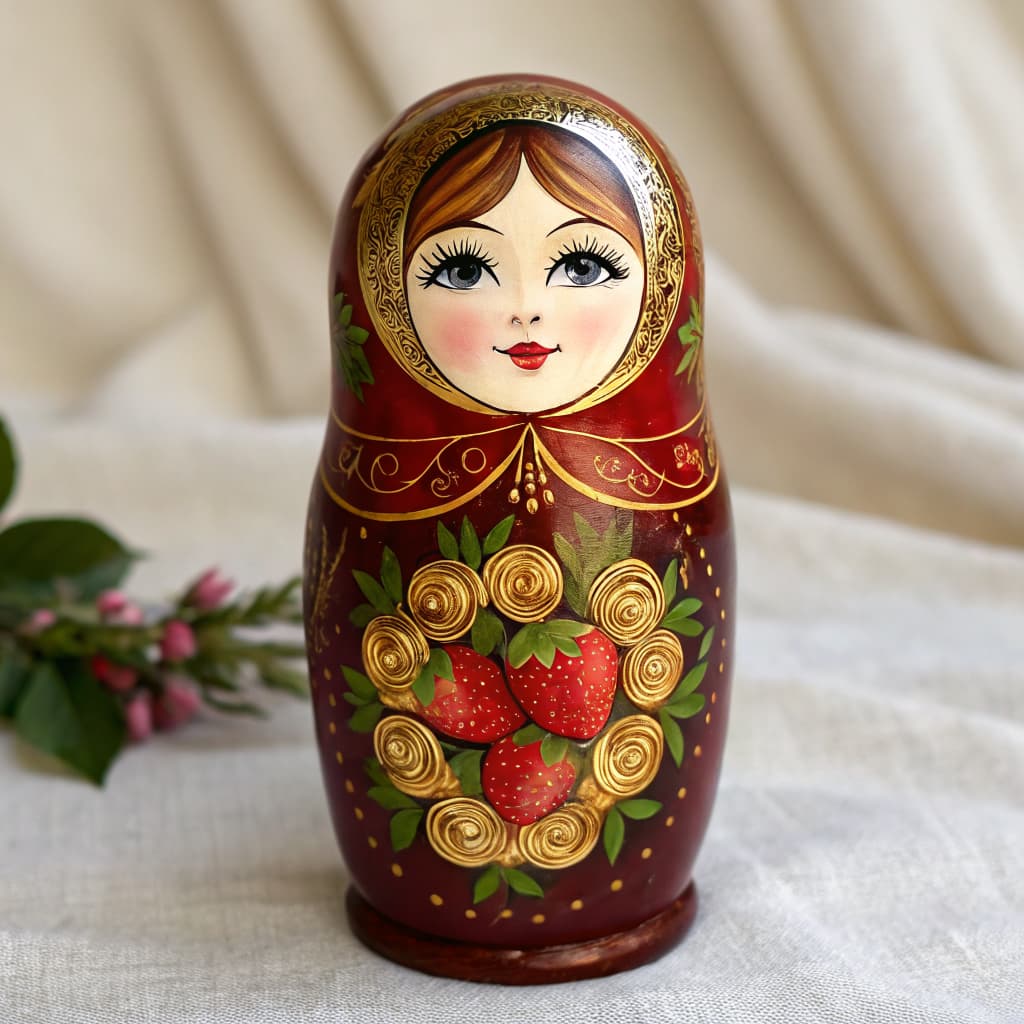
The matryoshka doll is, at its most literal, a wooden figure that opens to reveal a smaller figure inside, which opens to reveal a smaller one still. But almost from the moment Vasily Zvyozdochkin turned the first set on his lathe in 1890, the form carried meanings far deeper than its mechanics. The very name "matryoshka" derives from the Latin root mater — mother — by way of Matriona, a common pre-revolutionary Russian name associated with a stout, nurturing matriarch presiding over a large family. When Russians named the doll, they were not merely labeling a toy; they were encoding an entire worldview about motherhood, continuity, and the unseen life carried within.
The most immediate layer of symbolism is fertility and lineage. The largest doll is the mother, and each figure nested within her represents another generation — daughters, granddaughters, and finally the tiny, indivisible baby at the center. In traditional Russian culture, large and close-knit families were not merely common but valued as a measure of prosperity and divine blessing. Grandparents, aunts, uncles, and cousins played active roles in daily life. The matryoshka captured this ethos in miniature: a single form that, when opened, revealed an entire family. It is no coincidence that the image was later adopted as a symbol of Mother Russia herself — a nation that contains multitudes.
Beyond motherhood, the nesting structure suggests a philosophical idea common across Slavic folk thought: that truth, identity, and beauty are layered rather than singular. You must look beneath the surface to find what is hidden. Each smaller doll can be read as a more intimate, more essential version of the self — the public persona giving way to the private, the private giving way to the innermost core. Some scholars have compared the matryoshka to the concept of the Russian soul (russkaya dusha), a cultural archetype that prizes depth, complexity, and emotional authenticity over outward simplicity.
The matryoshka also functions as a symbol of unity and protection. The outermost doll physically shelters every figure within it. In folk tradition, this resonated with the idea that the family — and by extension the community or the nation — protects its most vulnerable members. During the Soviet era, state workshops sometimes produced matryoshka sets depicting political leaders nested one inside the other, a satirical twist on this protective symbolism. The largest leader "contained" all the smaller ones, a visual commentary on hierarchy and power that Russian audiences read instantly.
There is a quieter, more personal symbolism as well. In many Eastern European households, a matryoshka set received as a gift is not just decoration. It represents a wish for abundance — abundance of children, of health, of fortune. Young brides were traditionally given sets with many pieces as a blessing for a large family. To this day, matryoshka sets are among the most common gifts at Russian weddings and christenings, a tradition that links the wooden doll to the milestones of human life.
The spiritual dimension should not be overlooked. In Russian Orthodoxy, the concept of nested sacred spaces — the altar within the sanctuary, the sanctuary within the church, the church within the city — mirrors the matryoshka form. Some art historians have argued that Sergey Malyutin, who painted the original 1890 set, drew not only on Japanese nesting dolls (the Fukuruma figures from Honshu) but also on the deeply nested iconography of Russian religious art. Whether or not this was conscious, the resonance is striking.
Contemporary artists have expanded the symbolism further. Modern matryoshka sets depict everything from fairy-tale heroines to feminist icons, from ecological themes to portraits of jazz musicians. Yet even in these playful reinterpretations, the core metaphor persists: that within every outer form there is something more to discover, something smaller and more essential waiting to be revealed. The act of opening a matryoshka — the gentle twist, the satisfying split, the surprise inside — is, at its heart, a ritual of uncovering meaning. It is what makes the form as resonant in a Brooklyn apartment as it was in a Moscow workshop over a century ago.
At Artisanal Babushkas, we believe the symbolism of the matryoshka is inseparable from its craft. When our artisans paint a mother figure with a child hidden inside, they are working within a tradition that stretches back through Russian folklore, Orthodox iconography, and pre-Christian fertility symbols. Every set we carry holds these layers of meaning — literally and figuratively — and we think that is what gives the matryoshka its enduring, cross-cultural power.