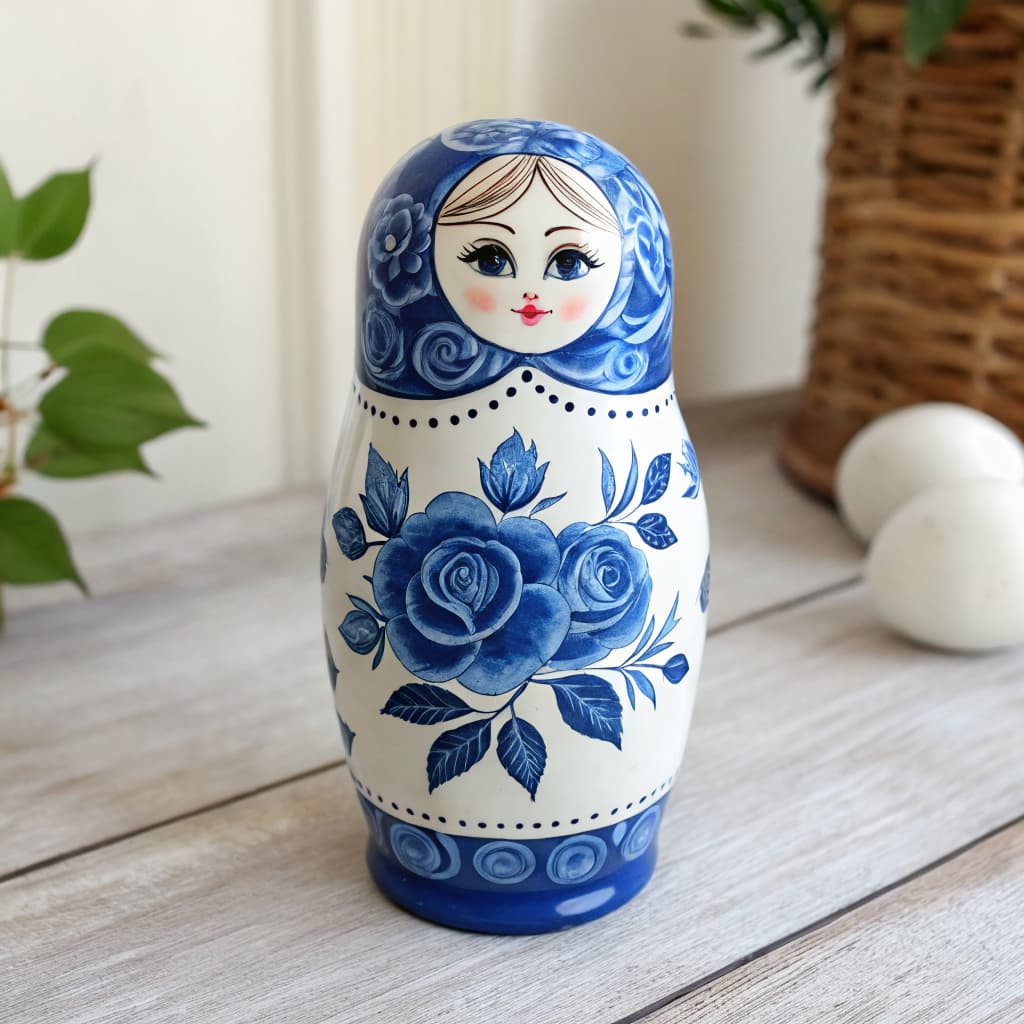
How to Care for Your Nesting Dolls: A Collector's Guide
Hand-painted nesting dolls are meant to be treasured for generations. The combination of aged wood, mineral pigments, and hand-applied lacquer creates a surface that is remarkably durable — but not invulnerable. With proper care, the vibrant colors and smooth finish will remain beautiful for decades. With neglect, humidity, direct sunlight, and careless handling can undo years of an artisan's work. Here are our best practices for keeping your collection in pristine condition.
Storage is the single most important factor. Keep your dolls in a dry, temperature-stable environment — ideally between 60 and 75 degrees Fahrenheit with relative humidity below 55 percent. Avoid basements, attics, or rooms with large temperature swings, as fluctuations cause the wood to expand and contract, which can crack the paint and warp the nesting fit over time. A glass-fronted display cabinet in an interior room offers the best combination of protection and visibility. If you must store dolls in boxes, wrap each piece in acid-free tissue paper and avoid sealed plastic containers, which can trap moisture.
Sunlight is the silent enemy of painted wood. Prolonged direct UV exposure will fade pigments — particularly reds and yellows, which are the most light-sensitive of the traditional matryoshka palette. If your display is near a window, rotate the dolls periodically so that no single side bears the full burden of sun exposure. Better yet, use UV-filtering glass on your display cabinet or apply UV-blocking film to nearby windows. The backs of the dolls, which typically receive less detailed painting, are especially susceptible to uneven fading that can make a doll look "ghosted" from one side.
Cleaning should be minimal and dry. Dust with a soft, lint-free cloth — microfiber is ideal. Never use water, glass cleaner, furniture polish, or any liquid product on a painted or lacquered surface. Water can seep into micro-cracks in the lacquer and cause the paint beneath to blister or lift. For stubborn dust in tight areas — the seam line, the indentation at the base — a soft-bristle makeup brush or a photographer's lens brush works well. If a doll has become genuinely grimy (for instance, after years in a smoker's home), consult a conservator who specializes in painted wood objects rather than attempting to clean it yourself.
Handling technique matters more than you might think. When opening or closing a doll, hold the bottom half firmly in one hand and gently twist the top half with the other. Never pull straight apart — the wood grains are aligned vertically, and a direct pull can stress the seam. If a doll feels tight, look for the grain alignment marks (faint lines or dots on the seam made by the turner) and align them before twisting. Never force a doll together or apart. Forcing can crack the thin walls, chip paint along the seam line, or damage the lip that keeps the two halves joined. If a doll has seized from humidity changes, place it in a dry room for 24 to 48 hours and try again — the wood will contract slightly as it dries.
Display strategy depends on your goals. For maximum visual impact, display one set fully opened in a row from largest to smallest — this shows off the full artistry of each piece and makes a striking linear arrangement on a shelf or mantelpiece. For preservation, keep the set nested, which minimizes each piece's exposure to light, dust, and air. Some collectors compromise by displaying their newest or most visually striking sets open and keeping their rarer or more valuable sets nested in a closed cabinet.
For sets valued at over $200, consider adding them to your homeowner's or renter's insurance as scheduled personal property. Document each set with photographs from multiple angles, and record the artisan's name, workshop of origin, number of pieces, date of purchase, and price paid. This documentation is invaluable not only for insurance purposes but for future resale or estate planning. A well-documented collection is worth significantly more than an undocumented one of equal artistic quality.